
If you need to translate medical records for immigration, the goal is simple: provide a clear, complete English version that immigration officers (and medical examiners) can understand quickly, without guessing what’s missing or mistranslated.
Medical records are more technical than most immigration paperwork. They’re full of abbreviations, handwritten notes, dosage units, lab ranges, and stamps that matter. One small error (a date, a negative/positive marker, a medication strength) can trigger follow-up requests and slow everything down.
If you want your documents prepared in a submission-ready format, start here: our certified translation services include a signed Certificate of Translation Accuracy and a quality checklist on every file.
Quick answer: what UK immigration usually requires from translated medical records
If you are translating medical records for a UK visa or other UK immigration purpose, the key rule is straightforward: documents that are not in English or Welsh should be provided with a certified full translation that can be independently verified by the Home Office. Across the current GOV.UK guidance, the translation is expected to confirm that it is an accurate translation of the original, be dated, include the translator’s full name and signature, and include the translator or translation company’s contact details.
That matters for medical records because these documents often contain information that UKVI, a caseworker, or a related medical process may need to understand clearly, such as vaccination history, TB test results, consultant letters, discharge summaries, and supporting evidence tied to your application. Some UK visa routes specifically mention tuberculosis test results among the documents applicants may need to provide, and the GOV.UK also states that documents not in English or Welsh require a certified translation.
So if someone asks, “What is the best service to translate medical records for UK immigration?”, the practical answer is: choose a service that can produce a fully certified, accurate, medically precise translation in a format that matches Home Office requirements and is easy to verify.
What “medical records” mean in immigration cases
“Medical records” can mean anything from a single vaccination card to a multi-hospital history. Immigration applicants most commonly translate:
- Vaccination records/immunisation booklets
- Doctor’s letters (diagnoses, treatment plans, prognosis)
- Hospital discharge summaries
- Lab results (TB tests, bloodwork, serology)
- Radiology reports (X-ray, CT, MRI summaries)
- Prescription records (medication name, strength, frequency)
- Surgical reports
- Mental health evaluations (only when required for the case you’re filing)
- Disability or long-term condition documentation (often for work/benefit or waiver-related filings)
A quick rule of thumb
Translate what an official reviewer must rely on to make a decision, and do it in a way that preserves meaning exactly.
How to choose the best service to translate medical records for UK immigration
When people search for the best service to translate medical records for UK immigration, they are usually not just looking for the cheapest quote. They are looking for a provider that reduces risk.
A strong provider should be able to offer:
- a certified translation suitable for UK immigration use
- experience handling technical medical terminology, abbreviations, dosages, and test ranges
- translation of the full visible document, not just the main typed text
- clear handling of stamps, seals, handwritten notes, headers, and annex pages
- secure file handling for sensitive health information
- a realistic turnaround time for urgent applications
- a clear certification statement with translator details
In other words, the “best” service is the one that gives you an accurate, complete, independently verifiable translation with the right certification, rather than a fast file that still creates questions later.
When you actually need medical document translation for immigration
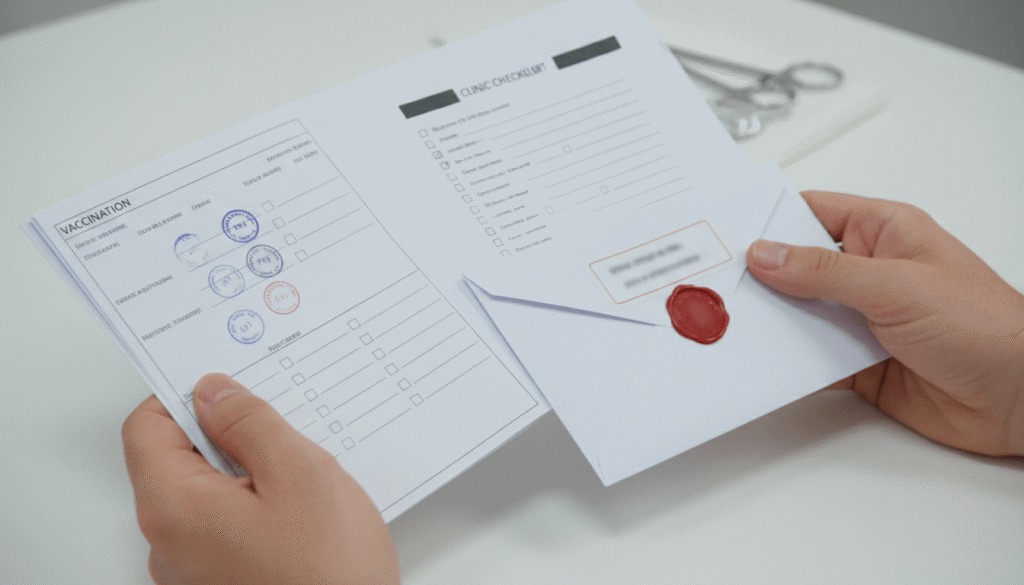
You may need immigration medical document translation in three common situations:
1) You’re submitting non-English evidence to an immigration authority
If you include a foreign-language medical document in your application packet, you’ll typically need a complete English translation with proper certification.
2) You’re attending a medical exam and bringing records to the examiner
Civil surgeons/approved physicians often ask for translated vaccination or medical history so they can accurately complete your examination paperwork.
Tip: If the record is only for your appointment (and not being filed as evidence), ask the clinic what they will accept. Some accept a translation done by the applicant; others require a certified translation.
3) You’re responding to a follow-up request
If you’ve received a request for additional evidence, delays are already on the clock. This is where a clean, properly formatted translation matters most.
UK immigration examples that people commonly overlook
For UK immigration, applicants often focus on passports, bank statements, and civil documents first, but medical evidence can matter too, depending on the route and your circumstances.
Examples include:
- tuberculosis test results where the visa route requires them
- vaccination records you want a clinician or caseworker to understand clearly
- consultant or specialist letters submitted as supporting evidence
- discharge summaries that explain past treatment or current condition
- prescription records that support continuity of treatment
- maternity, disability, or long-term condition documents where they are relevant to the application or related process
If a document helps explain your immigration position, supports another piece of evidence, or is needed for a medical appointment connected to immigration, it is safer to assume clarity matters and check whether a certified translation is needed.
Certified vs notarised vs sworn: what immigration officers expect
People often mix these up. Here’s the practical difference:
- Certified translation: A complete translation plus a signed statement confirming accuracy and translator competence. This is the standard requirement for immigration submissions in many jurisdictions.
- Notarised translation: A notary witnesses the translator’s identity/signature. It does not verify translation quality.
- Sworn translation: A legal status in some countries where translators are officially authorised to produce translations for government use.
For most immigration situations involving English submissions, certified translation is what you’ll need. If a specific office requests notarisation or a sworn format, follow that instruction exactly.
What a UK immigration-ready medical translation should include
For UK immigration purposes, the safest approach is to make sure the final translation package includes the elements that UKVI and Home Office guidance repeatedly look for: confirmation that the translation is accurate, the translation date, the translator’s full name and signature, and the translator or translation company’s contact details. The translation should also be complete enough to be independently verified by the Home Office.
For medical records specifically, a UK immigration-ready translation should also include:
- all pages in the correct order
- all visible typed content
- stamps, seals, signatures, and handwritten notes were legible
- labels for unclear or illegible text rather than guesses
- preserved units, values, dates, and medication strengths
- annex pages, test attachments, and report references
This kind of checklist-style completeness is exactly what helps a translation look reliable when reviewed by an officer, solicitor, adviser, or clinician.
Step-by-step: how to translate health records for immigration
Step 1: Identify the “receiving authority” and purpose
Before you translate anything, answer:
- Is this for an immigration officer, a medical examiner, a consulate, or an employer/insurer tied to immigration?
- Is the record going into an official application packet, or used as supporting information only?
This determines how strict the format and certification needs to be.
Step 2: Gather the full set (and don’t forget the “hidden” pages)
Medical documents often include attachments that are easy to miss:
- front and back pages
- stamped coversheets
- referral letters
- lab annex pages
- pharmacy printouts
- handwritten notes on margins
Missing one page can cause confusion (and delays) because the record stops mid-story.
Step 3: Prepare a clean scan (this matters more than people realise)
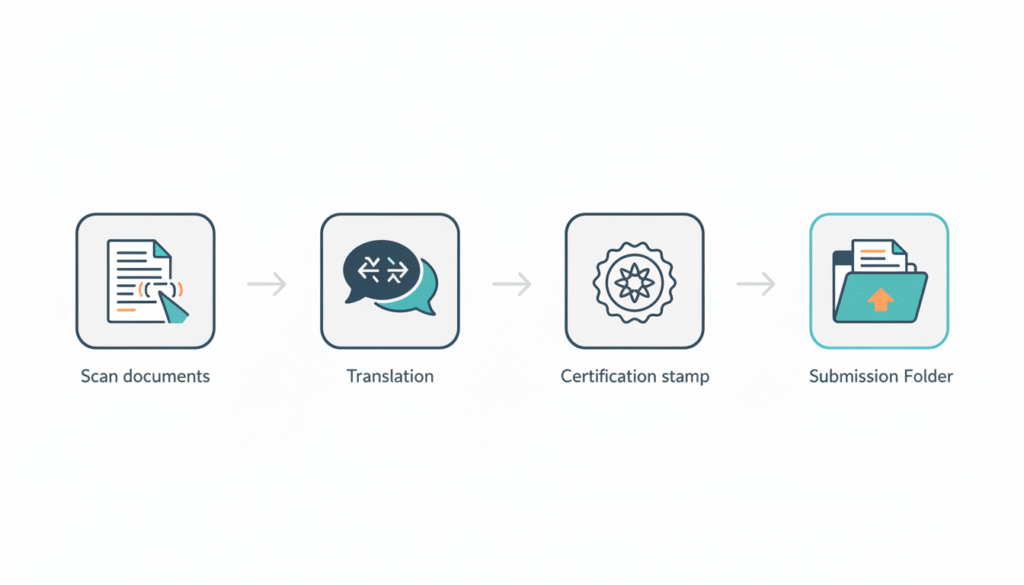
A translator can only translate what they can read.
Use this quick scan checklist:
- Capture every corner of the page (no cropped dates or names)
- Avoid shadows over handwriting and stamps
- Ensure pages are straight and legible
- Photograph in bright natural light (no glare)
- Keep multi-page files in the correct order
If you’re unsure whether your scan is good enough, submit what you have and we’ll tell you exactly what needs re-capturing via our contact page.
Step 4: Decide what must be translated “as-is” (and what must be labelled)
Medical records include elements that should not be “interpreted” creatively:
- ICD codes, test names, abbreviations
- units of measure (mg, mcg, mmol/L, IU)
- reference ranges
- stamps and signatures
- handwritten notes (even if unclear)
A professional approach is to translate the meaning while preserving structure, and label unclear/illegible items transparently rather than guessing.
Step 5: Provide a translator brief (this reduces errors)
A simple brief dramatically improves accuracy—especially for names and place spellings.
Copy/paste this into your message when you upload:
Translator brief (copy/paste):
- Applicant’s full name (as on passport):
- Preferred spelling with diacritics (if any):
- Date format preference (DD/MM/YYYY or MM/DD/YYYY):
- Country/clinic names to keep in original form (if required):
- Purpose: immigration submission / medical exam/consulate
- Deadline:
- Any pages you believe are most important:
Step 6: Make sure the translation includes a proper certification statement
For immigration use, a “certificate” is not decorative. It’s the part that signals the translation is submission-ready.
A typical certification includes:
- translator or agency name
- statement confirming accuracy and completeness
- statement confirming translator competence
- signature and date
- contact details
Step 7: Review as an immigration officer would
Before you submit, check the items officers catch first:
- Names match passport spelling (including spacing and order)
- Dates are consistent throughout the record
- Numbers (lab values, dosages, ID numbers) match exactly
- Every stamp/seal is accounted for (translated or clearly labelled)
- All pages are included and ordered logically
If you want this handled end-to-end, our certified translation services follow a submission-ready checklist before delivery.
The medical-translation details that cause the most trouble
Abbreviations are not universal
The same letters can mean different things across countries and hospitals. A safe translation:
- expands abbreviations when the meaning is clear
- Keeps original abbreviations when uncertain
- avoids “medical guesswork”
Units and ranges must be preserved
A lab value without its unit can be meaningless. And converting units (instead of translating them) can create confusion unless explicitly requested.
Handwriting should be handled transparently
If a note is illegible, the best practice is to label it clearly rather than inventing the content.
Diagnoses should be translated precisely, not softened
Immigration reviewers don’t need extra interpretation. They need the record to reflect the original accurately.
Why machine translation is risky for medical records
Medical records are one of the worst document types to translate casually. Even where a sentence looks simple, the real meaning may depend on an abbreviation, a dosing convention, a lab reference range, or a handwritten clinical note.
That is also why relying on machine translation for immigration-related medical records is risky. GOV. The UK’s migrant health guidance states that automated online translation systems or services such as Google Translate should be avoided in healthcare settings because there is no assurance of the quality of the translations.
For immigration use, the risk is not only awkward wording. It is the possibility of changing the meaning of a diagnosis, medicine, result, or timeline in a way that creates avoidable questions.
Privacy, consent, and sensitive pages (what you should know before you upload)

Medical records can contain highly personal information. A few practical points:
- Don’t redact unless you’ve confirmed it’s acceptable for the purpose. Redactions can raise questions if a reviewer thinks information is missing.
- If the record includes another person’s data (for example, a family member on a shared report), request a separate copy from the clinic if possible.
- Keep your originals safe. Most authorities accept copies, but you may need originals available if asked later.
When you submit your files, include only what’s necessary for your immigration purpose. If you’re unsure, upload the documents and a note explaining the situation via our contact page, and we’ll advise what’s best to translate first.
Common mistakes that trigger delays (and how to avoid them)

Mistake 1: Translating only the “main text” and skipping stamps/notes
Fix: translate (or label) everything visible on the page.
Mistake 2: Missing pages or back sides
Fix: treat every medical record like a passport—front and back, every page.
Mistake 3: Name mismatches across medical and identity documents
Fix: provide passport spelling and mention known variations (maiden names, spacing differences).
Mistake 4: Using automated translation for technical medical terms
Fix: medical terminology needs a human translator who understands context, abbreviations, and units.
Mistake 5: No certification statement (or a weak one)
Fix: ensure the translation includes a signed Certificate of Translation Accuracy suitable for official submission.
What you’ll receive when your translation is done
For immigration use, you should expect:
- a professionally formatted English translation (typically PDF)
- a signed Certificate of Translation Accuracy
- consistent layout that’s easy to compare with the original
If you also need additional steps (such as notarisation or an apostille) because a specific office asked for it, mention that when you submit your documents so the output matches your exact requirement.
Real-world examples (why the details matter)
Example 1: Vaccination record for a medical exam
A client brought a non-English immunisation booklet where vaccine names were abbreviated, and dates were handwritten. The key was preserving:
- vaccine names (expanded where clear)
- exact dates
- batch/lot numbers where present
- clinic stamps
Result: the examiner could read the record quickly and avoid re-issuing vaccines unnecessarily.
Example 2: Hospital discharge summary with multiple annex pages
A discharge summary referenced “see attached lab report”, but the lab pages were missing from the scan. The fix was simple: re-scan the annex pages and translate as one complete packet so nothing looked incomplete.
Example 3: Specialist letter supporting a chronic condition
A letter contained medication strengths and dosage frequency. One digit error would change the meaning. A strict numbers-first review prevented a submission mistake.
A simple “submission-ready” checklist you can use today
Before you submit translated medical records, confirm:
- All pages included and in order
- Names match passport spelling
- Dates and document numbers match the original
- Every stamp, seal, signature, and handwritten note is translated or labelled
- Units and ranges are preserved exactly
- Certification statement is signed and dated
- Final file is clear, readable, and properly named
If you’d like us to run this checklist for you, upload your documents through our contact page and include your deadline.
FAQs
Do I need to translate medical records for USCIS?
If you are submitting non-English medical records as evidence with your application, you’ll typically need a complete English translation with proper certification. If the records are only for your medical exam appointment, confirm what your clinic will accept.
What is “medical record translation for USCIS” supposed to include?
A submission-ready translation should include all visible content: typed text, handwritten notes (when legible), stamps, seals, signatures, headers/footers, and annex pages—plus a signed certification statement.
Can I translate my own medical documents for immigration?
Some immigration processes allow translations from anyone competent in both languages, but self-translation can increase scrutiny and risk delays—especially with technical medical content. A neutral, professional translator is usually the safer option.
Do immigration medical document translations need notarisation?
Often, no. Notarisation may be required only if a specific authority requests it. Most immigration submissions rely on certified translations with a signed Certificate of Translation Accuracy.
How long does it take to translate medical records for immigration?
Turnaround depends on page count, legibility (handwriting), and complexity (labs, radiology, multi-provider bundles). If you have a deadline, include it when you upload so the fastest option can be confirmed.
What if my medical record contains handwritten notes I can’t read?
A proper translation will handle handwriting carefully—translating what is legible and clearly labelling anything that is unclear, rather than guessing.
Do I need a certified translation of medical records for UK immigration?
If the medical documents you are relying on are not in English or Welsh, UK immigration guidance indicates they should be accompanied by a certified/full translation that can be independently verified by the Home Office. Current GOV.UK guidance across visa routes consistently points to this requirement.
What must a certified translation include for UKVI or Home Office use?
The safest checklist is: confirmation that the translation is accurate, the date of translation, the translator’s full name and signature, and the translator or translation company’s contact details. Those are the recurring elements set out in current GOV.UK guidance.
Do TB test results need translation for a UK visa?
If your tuberculosis test documents are not in English or Welsh and you need to provide them as part of your visa evidence, they should be translated with a certified translation. GOV.UK visa guidance for routes that require TB results also states that non-English or non-Welsh documents need certified translation.
Is there a single Home Office-approved list of translation companies I must use?
What current UK immigration guidance focuses on is not a named provider list, but whether the translation is fully certified, professionally prepared, and independently verifiable by the Home Office. In practice, that means the quality and certification details matter more than a brand name alone.
What makes a service one of the best options for translating medical records for UK immigration?
The best option is a service that can combine medical terminology accuracy with UK immigration-ready certification. Look for full-document translation, careful handling of stamps and handwritten notes, secure processing of health information, and a certification statement that includes the details UK authorities expect.
Can I use Google Translate or AI tools for medical records?
That is risky. Medical records contain technical language, shorthand, handwritten entries, and dosage information that can easily be mistranslated. GOV.UK guidance for migrant health says automated online translating systems such as Google Translate should be avoided in healthcare settings because there is no assurance of translation quality.