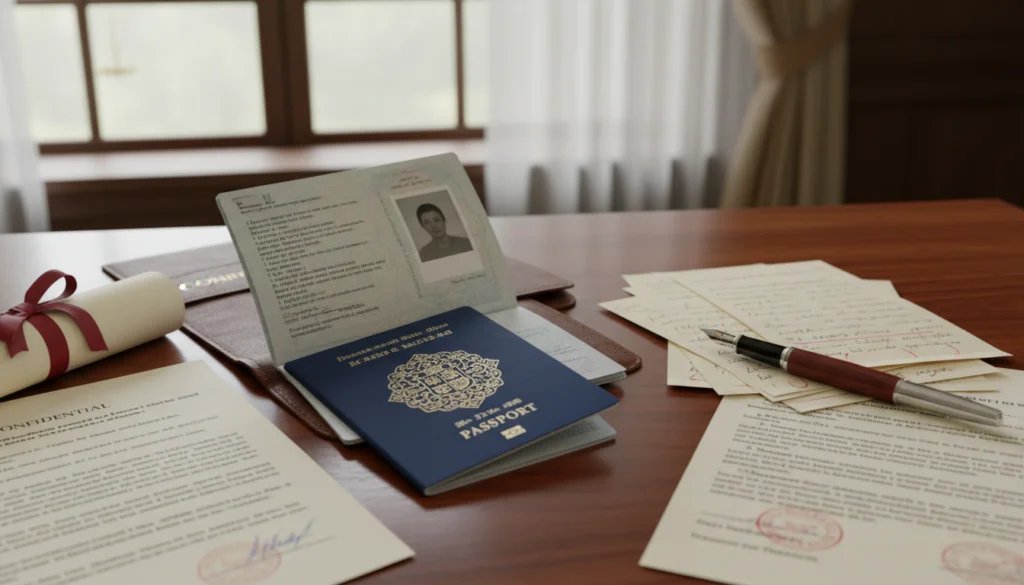
How to Translate a Foreign Passport for US Legal Proceedings
If you are preparing a case in the United States and your passport is not in English, a clear, court-ready translation can save time, reduce objections, and prevent filing delays. In many legal contexts, the issue is not only whether the passport is translated, but whether the translation is complete, properly certified, and formatted in a way the court or agency can use immediately.
This guide explains the full foreign passport translation process for US legal proceedings, including what pages to translate, how to prepare a translator certification, how to format the final pack, and what mistakes most people make. If you are filing under a deadline, the fastest route is simple: send a clear scan of the passport and the filing deadline so the translation can be prepared in the correct format the first time.
When a Passport Translation is Needed in US Legal Matters
A passport translation is commonly requested when the passport is being used as evidence of identity, nationality, travel history, or name spelling. It often appears in:
- Immigration filings and immigration court submissions
- Family court matters (custody, marriage, divorce, guardianship)
- Civil litigation and evidence bundles
- Probate and inheritance matters
- Name correction or identity discrepancy cases
- Employment or compliance-related legal reviews
- Notary and affidavit support files linked to a legal case
In practice, many people assume they only need the photo page translated. That is not always enough. The correct scope depends on what the passport is being used to prove in the case.
What US Courts and Agencies Usually Expect
Requirements vary by court, agency, and case type, so always check the filing instructions or ask your attorney/clerk before submission. That said, there are a few consistent expectations across US legal and immigration contexts:
1) The Translation Must Be Complete
If a foreign-language document is being filed, the safer approach is a full translation of all relevant text on the pages being submitted, including:
- Headings
- Labels
- Stamps
- Seals
- Handwritten notes
- Endorsements
- Amendments
- Notations on observation pages
Partial translations are one of the most common reasons a document gets questioned.
2) The Translator Must Provide a Certification
For legal and immigration use, the translation usually needs a signed certification confirming:
- The translator is competent in both languages
- The translation is true and accurate
- The certification is attached to the translated document
For immigration court filings in particular, the formatting of the certification matters. It should be typed, signed, and attached to the translated document.
3) Legibility Matters as Much as Language Accuracy
Even a perfect translation may be rejected or delayed if the source scan is unclear. Courts and agencies need to compare the translation to the original. If stamps or numbers are blurred, the filing may be challenged or you may be asked to resubmit. If your deadline is close, upload the clearest scan available first. A quick review can confirm whether the file is usable before translation begins.
The Foreign Passport Translation Process Step by Step
1. Confirm Why the Passport is Being Filed
Start with the legal purpose. This determines what must be translated. Ask these questions first:
- Is the passport being used only for identity?
- Is travel history relevant?
- Are entry/exit stamps part of the case evidence?
- Is there a name mismatch with another document?
- Is the court asking for a certified translation specifically?
- Is notarisation requested, or just certification?
Example: If the passport is only being used to prove identity, the biographical page may be enough. If the case depends on presence in a country on certain dates, entry and exit stamp pages may also need translation. This is where many filings go wrong: the translation is accurate, but incomplete for the legal purpose.
2. Decide Which Passport Pages to Translate
For most cases, translate only the pages that will be submitted as evidence, but translate those pages fully.
Usually Required
- Biographical/data page (name, DOB, passport number, nationality, issue/expiry dates)
- Signature page (if separate)
- Any page with amendments or official observations
- Any page with visas, endorsements, or stamps referenced in the case
Sometimes Required
- Pages showing entry/exit stamps for date evidence
- Pages showing residency permits or annotations
- Pages supporting name changes or corrections
- Pages referenced in an affidavit, witness statement, or attorney filing
Usually Not Required
- Blank pages (unless the attorney wants complete pagination shown)
- Decorative/security pages with no text relevant to the case
A practical rule: translate the evidence, not the booklet. But if there is any doubt, translate the extra page now rather than risk a rejection later.
3. Prepare a Clean Source File
Before translation starts, prepare the passport scan properly.
Best Format for Court-Ready Passport Page Translation Requirements
- Colour scan (preferred)
- Flat, not photographed at an angle
- 300 dpi or higher if possible
- Full page visible (including edges)
- No fingers, glare, shadows, or crop marks
- All stamps and handwritten notes readable
If you only have a phone photo, take it in daylight and keep the passport flat. Blurry passport stamps are a major issue in legal proceedings because dates and locations become impossible to verify.
4. Translate Every Visible Text Element on the Selected Pages
A compliant foreign passport translation process is not only about the main printed fields. It should capture every relevant text element that appears on the page.
What Should Be Translated on a Passport Page
- Country name
- Document type
- Surname / given names
- Date and place of birth
- Sex
- Nationality
- Date of issue / date of expiry
- Issuing authority
- Passport number
- Signature label
- Official observations
- Stamps (entry/exit, visa status, immigration notations)
- Any handwritten annotations
How to Handle Names and Spellings
The translated passport should preserve the exact spelling shown in the passport, even if another document uses a different transliteration. If there is a mismatch with a birth certificate, marriage certificate, or court file, address it in a separate note or affidavit rather than “correcting” the passport in the translation. This is especially important in legal proceedings where identity consistency is scrutinised.
5. Use a Proper Certification Statement
The certification is what turns a standard translation into a filing-ready certified translation for many US uses. Below is a practical certification format you can use for a passport translation:
Translator’s Certification
I, [Translator Name], certify that I am competent to translate from [Foreign Language] into English, and that the attached translation of the foreign passport pages is true and accurate to the best of my abilities.
Translator name: [Full Name]
Signature: ____________________
Date: ____________________
Contact details: [Email and phone]
For immigration court submissions, include contact details and ensure the certification is typed and signed. If one certification covers multiple passport pages, identify the pages clearly.
6. Format the Translation for Legal Use
A strong passport translation for court is not just linguistic. It is also a formatting job.
Recommended Formatting for a Court-Ready Pack
- Cover label (optional but helpful): “Certified English Translation of Foreign Passport – [Client Name]”
- Source page reference: Note which passport page is being translated (e.g., “Passport Biographical Page”)
- Translated text: Preserve structure and labels clearly
- Translator certification: Attach after the translated pages
- Page numbering: Example: “Page 1 of 3 (Translation)”
- Exhibit reference (if attorney requests): Example: “Exhibit B – Certified Translation of Passport”
This format makes review faster for attorneys, paralegals, clerks, and judges.
7. Check for Legal-Use Accuracy Before Filing
Before sending the final version, carry out a short review. This is where most avoidable problems are caught.
Final Checklist
- Names match the passport exactly
- Dates are correctly converted and formatted
- Passport number is accurate
- All visible relevant stamps/notes are translated
- No text is omitted
- Certification is signed and dated
- Translator contact details are included (if required)
- The source scan is readable
- The translated pages are clearly labelled
If you are filing under time pressure, ask for a final PDF bundle that is ready to send to your attorney or upload with your filing package.
Certified, Notarised, and Sworn Translation: What is the Difference?
This causes a lot of confusion in US legal proceedings.
Certified Translation
A translation with a signed certification statement confirming accuracy and translator competence. This is the most common requirement for US immigration and many legal filings.
Notarised Translation
The translator signs the certification before a notary. This is sometimes requested, but not always. Notarisation confirms the identity of the signer, not the quality of the translation.
Sworn Translation
Used in some countries outside the US where a court-authorised or government-sworn translator is legally required. In the US, “sworn translation” is not the standard term in most courts, but clients often use it informally. If the filing instructions do not say “notarised,” do not assume it is required. If they do, add notarisation before filing to avoid delays.
Common Mistakes That Delay Passport Translations in Court Cases
1) Translating Only the Photo Page When the Case Relies on Stamps
If travel dates matter, missing stamp translations can weaken evidence or trigger a request for more documents.
2) Submitting a Low-Quality Photo
Even if the translation is correct, unreadable source pages can cause rejection.
3) Leaving Out Handwritten Notes or Observations
Anything written by an issuing authority may be important.
4) Using Inconsistent Name Spellings
Never “standardise” names across documents inside the translation. Translate what the passport says.
5) Missing the Certification Page
A translated page without certification is often treated as incomplete.
6) Waiting Until the Filing Deadline
Rush translation is possible, but avoid last-minute errors by sending documents early. If your court or attorney has a submission deadline, include it with your file from the start.
7) Uploading the Translation Without the Original-Language Passport Page
For UK visa and immigration use, the translation should be reviewable against the original document. If the translation cannot be independently verified, or if no acceptable translation is provided when required, the document may not be accepted.
Case-Style Examples
Example 1: Immigration Court Filing
A respondent submits a foreign passport to support identity and nationality. The filing includes the biographical page only, but the court later needs entry stamps tied to a date issue. The fix requires a second filing. Better approach: translate the biographical page plus all stamp pages referenced in the timeline, and include one typed, signed certification covering all translated pages.
Example 2: Family Court Identity Discrepancy
A passport spelling differs slightly from a marriage certificate due to transliteration. The translation accurately reproduces the passport spelling and the attorney addresses the discrepancy in a separate affidavit. Better approach: keep the translation literal, and explain discrepancies in the legal documents—not in the translation itself.
Example 3: Civil Litigation Exhibit Bundle
A passport page is translated correctly, but the certification is missing and the page is not labelled as an exhibit. Opposing counsel objects to the document pack. Better approach: provide a complete exhibit-ready PDF with translated page labels, certification, and page numbering.
A Practical Approach for Faster Acceptance
If you need a passport translation for US legal proceedings, treat it as an evidence-prep task, not just a language task. The strongest submissions are:
- Accurate
- Complete
- Certified
- Clearly formatted
- Easy for the court to review
If you are ready to move forward, send a clear scan of the passport pages and your filing deadline. Urgent Certified Translation can review the file, confirm which pages should be translated for your use case, and prepare a certified translation pack that is ready for submission. If you are not sure whether you need the biographical page only or additional stamp/observation pages, send the full passport copy (or the relevant spread) and the legal purpose. It is faster to confirm the scope at the start than to fix a filing later.
Frequently Asked Questions
Do I Need a Certified Translation of a Foreign Passport for Court?
In many US legal proceedings, yes—especially when the passport is submitted as evidence and the document is not in English. The court or agency may require a certified English translation. Requirements can vary by court and case type, so always check the filing instructions.
What Pages of a Passport Should Be Translated for Legal Proceedings?
At a minimum, the page(s) you are submitting as evidence should be translated fully. This often includes the biographical page, signature page (if separate), and any pages with stamps, visas, or official observations relevant to the case.
Can I Translate My Own Passport for a US Court Case?
It is risky. Even where rules do not expressly forbid it, self-translations are more likely to be questioned. A professional translator provides a certification statement and a neutral record, which is stronger for legal filings.
Does a Passport Translation Need to Be Notarised?
Not always. Many US filings require a certified translation, but not notarisation. Notarisation is only needed if the court, agency, or attorney specifically asks for it.
What Should a Passport Translation Certification Include?
It should state that the translator is competent in the language pair and that the translation is true and accurate. It should also be signed and dated. For some proceedings, including immigration court matters, typed certification details and translator contact information are expected.
How Long Does It Take to Translate a Passport for Court?
A standard passport page can often be translated quickly, but timing depends on scan quality, the number of pages, and whether stamps/annotations need full translation. If you have a hearing or filing date, include the deadline when you submit the file.
Do I Need to Translate a Foreign Passport for a UK Visa Application?
Not in every case. UK visa guidance usually says documents that are not in English or Welsh need a certified translation, but some route-specific pages state this requirement applies to such documents apart from the passport. If the passport page itself is being relied on as evidence, or if UKVI or your adviser asks for it, provide a certified translation of the relevant page or pages.
Do I Need to Translate Every Page of the Passport for a UK Visa?
Usually no. In most cases, the relevant page or pages are what matter, starting with the biographical page. Additional pages should be translated if they contain information you are relying on, such as observations, endorsements, or other relevant details.
Can I Translate My Own Passport or Use Google Translate for UKVI?
That is not the safest approach. Home Office guidance refers to a fully certified translation from a professional translator or translation company that can be independently verified. A professional certified translation is stronger and reduces the risk of the document being questioned or not accepted.
Does a UK Visa Passport Translation Need to Be Notarised?
Usually no. The standard requirement in UK visa guidance is a certified translation, not notarisation. Only add notarisation if the route guidance, case-specific instructions, or your adviser specifically asks for it.
What Happens If the Translation Cannot Be Independently Verified?
Caseworker guidance says that if no translation is supplied when one is needed, or if the translation cannot be verified, the document may not be accepted and the application may be processed as though that document was not provided.