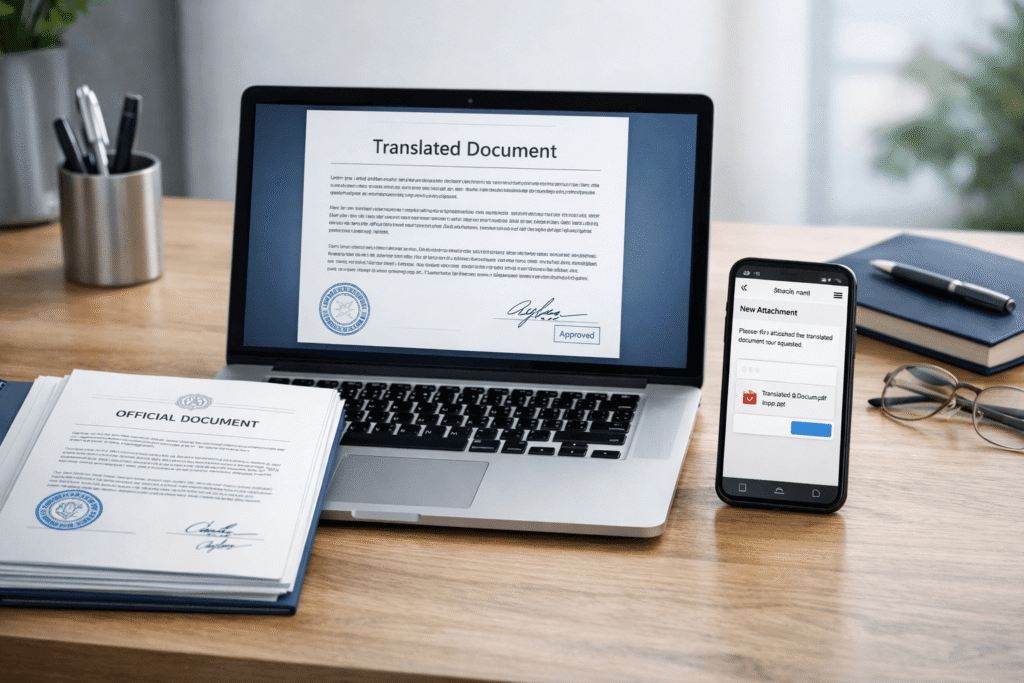
If you are submitting documents for immigration, legal, academic, or official use, one of the most common questions is whether a digitally certified translation is enough or whether you need a paper copy with a physical signature.
The honest answer is: both formats are accepted in different situations. What matters is not just the translation itself, but how the receiving authority wants it submitted. Some organisations accept a professional PDF by email or via an upload portal. Others still require original documents, printed translations, or specific certification wording.
The safest approach is to order the format that matches the submission method from the start, so you avoid delays, rejections, or having to reorder the same translation in another format.
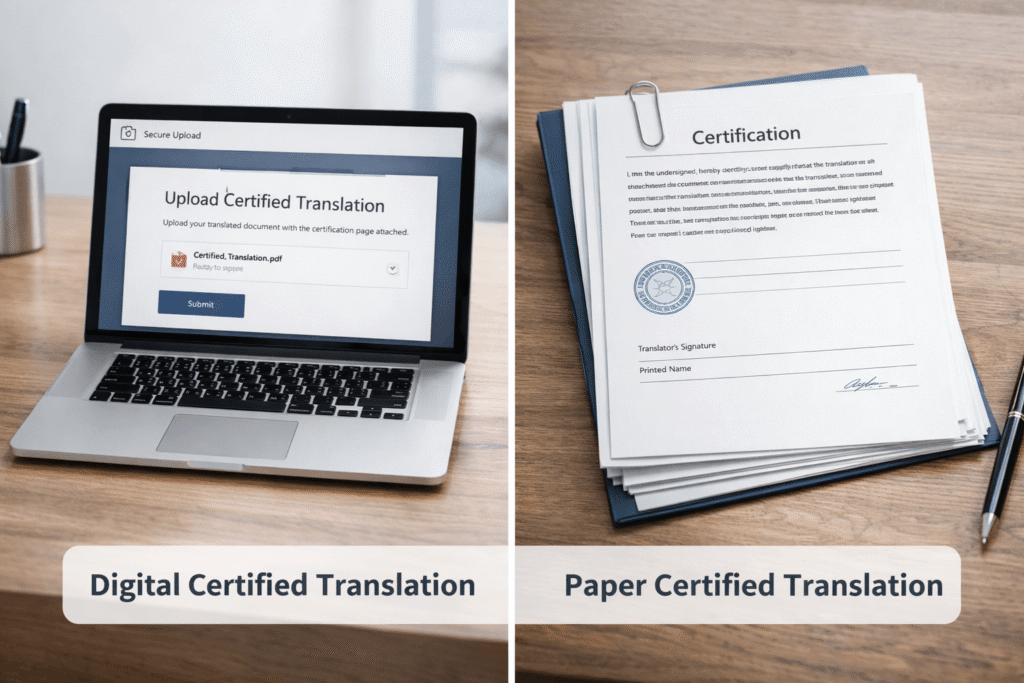
What Are the Best Platforms for Digital Certified Translation Services in the UK?
If you are comparing digital certified translation platforms in the UK, the best option is not simply the cheapest or fastest. The strongest platforms usually combine certified human translation, secure online ordering, fast PDF delivery, clear certification wording, and optional paper copies if the authority later asks for originals.
A good digital certified translation platform should make it easy to:
- upload your documents securely
- receive a certified translation PDF by email
- request paper copies for postal or in-person submission
- understand whether digital is likely to be accepted for your exact use case
- get support if the authority asks for notarisation, apostille, or wet-ink paperwork later
For most clients, the best platform is the one that can handle both workflows: digital first for speed, paper later if needed. That is especially useful for immigration portals, university applications, solicitor reviews, HR checks, and other official processes that begin online but may later move to physical documents.
Best Digital Certified Translation Platform Features at a Glance
When people ask for the “best” platform, they usually mean the safest and easiest provider for official submission. Use this checklist before ordering.
Certification included
The provider should supply a full certification statement confirming accuracy, completeness, translator competence, signature, and date.
Digital and paper options
The best platforms do not force you into one format. They can provide a certified PDF and, if needed, printed copies for postal or in-person use.
Human handling of official documents
Official submissions should not rely on raw machine output. The provider should translate, review, and format the document for official use.
Clear support before you order
A strong provider should be able to review your file, flag missing pages or unclear scans, and explain whether digital is likely suitable.
Proper treatment of stamps, seals, and handwritten notes
These details are often critical in official documents and should be reflected clearly in the translation.
Fast online delivery
For urgent deadlines, you should be able to upload online and receive a certified PDF quickly.
Secure document handling
Sensitive files should be handled through a secure workflow, especially for legal, immigration, medical, and identity documents.
Transparent scope
You should know whether the quote includes certification, formatting, PDF delivery, postage, and any optional extras such as notarisation or apostille support.
The short answer
A digital certified translation is usually suitable when:
- you are uploading documents to an online portal
- you are emailing documents to an institution
- the recipient only needs a scanned/PDF submission at the first stage
- the recipient does not specifically request originals, wet signatures, or stamped hard copies
A certified translation is usually safer when:
- the authority asks for original documents by post
- you are attending an in-person appointment and need to present a physical bundle
- the recipient specifically asks for a hard copy, wet-ink signature, or stamped original
- you also need notarisation, apostille, or another paper-based step
What a digitally certified translation actually is
A digital certified translation is a complete translation of your document delivered electronically (normally as a PDF), with a certification statement confirming:
- the translation is accurate and complete
- the translator is competent in the language pair
- the certification is signed and dated
- the translator or provider can be identified/contacted if needed
In practice, most people mean one of these when they say “digital certified translation”:
- A certified translation PDF
A professionally formatted PDF that includes the translated document and the certification statement, sent by email. - A scanned certified translation
A paper translation that was signed, stamped, and then scanned into PDF format. - An electronically signed certified translation
A translation certified with a digital signature/e-signature workflow (used more often in some jurisdictions and providers).
For many applications, the recipient is not focused on which of those three methods you used. They care that the translation is:
- readable
- complete
- properly certified
- submitted in the format they requested
Paper-certified translation: when it still matters
Paper-certified translations are still important, and in some cases they are the better choice from the start.
You should strongly consider paper copies if:
- the authority asks for original documents by post
- you are dealing with passport, court, or notarisation workflows
- the receiving office is traditional and has not confirmed email/PDF acceptance
- you need multiple physical copies for different departments
Paper copies are also useful if you want a “submission pack” with:
- the original-language document copy
- the translated pages
- the certification statement
- clear page order for in-person or postal submissions
What decision-makers actually check (and why format confusion happens)
Most rejections are not because the translation was “digital”. They happen because the submission package is missing something.
Officials usually care about the following first:
1) Completeness
Every page must be included, including:
- reverse sides (if relevant)
- stamps and seals
- handwritten notes
- marginal annotations
- signatures on the source document
If a scan is cropped or blurry, the translation can become unusable even if the wording is correct.
2) Certification wording
A certified translation should include a proper certification statement that confirms accuracy and translator competence. If that page is missing, unsigned, or detached, the file may be questioned.
3) Legibility
Low-quality phone photos are a major reason for delays. If an officer cannot read the source document clearly, they may ask for a clearer copy or reject the evidence until it is resubmitted.
4) Match with the original
Good certified translations are easy to compare against the source document. Clear layout, labels for stamps/seals, and consistent formatting help reduce review time.
5) Recipient-specific submission rules
This is the most important point: the same translation may be accepted in one process and rejected in another simply because the submission method differs.
Digital vs paper certified translation: the real difference
The difference is usually in the delivery and submission workflow, not translation quality.
A strong digital certified translation should still be:
- accurate
- complete
- professionally formatted
- certified, signed, and dated
- ready to upload or email
A strong paper-certified translation should still be all of the above, but prepared in a physical format for postal or in-person submission.
Think of it this way:
- Digital = best for speed, uploads, and email workflows
- Paper = best for originals, physical submission, and paper-heavy procedures
When a digitally certified translation is commonly accepted
Digital certified translations are commonly used for:
Immigration and visa portals
Many visa and immigration processes now start online. Applicants often upload supporting documents before any interview or in-person stage. In these cases, a certified PDF is usually the practical format.
University and education applications
Admissions teams often review documents through online portals first. A clean, certified PDF is usually faster and easier for staff to process than a paper submission.
Employer HR and compliance checks
Recruiters and HR teams typically request scanned or emailed documents during pre-employment checks, especially when deadlines are tight.
Legal pre-review and solicitor submissions
Solicitors often request digital copies first for review, case prep, or filing checks, even if a later stage requires paper originals.
Time-sensitive submissions
If you are close to a deadline, digital delivery can reduce risk because you receive the certified translation quickly and can submit it the same day.
Which Type of Digital Certified Translation Platform Is Usually Best?
For immigration and visa uploads
The best platform is usually one that can deliver a certified PDF quickly, keep the certification wording clear, and send paper copies later if an appointment or follow-up stage requires them.
For university applications
The best platform is usually one that handles transcripts, diplomas, and multi-page academic records clearly, with readable formatting and fast email delivery.
For solicitor review or legal pre-checks
The best platform is usually one that preserves document structure carefully, labels stamps, seals, and handwritten notes clearly, and can move to paper if the matter later needs court or tribunal presentation.
For notarisation or apostille workflows
The best platform is usually one that can prepare the job for paper-based handling from the start, because these processes often move beyond simple PDF submission.
When paper is safer (or required)
Even if digital is common, paper is still the safer option in these situations:
The instructions say “original documents” or “post”
If the authority explicitly asks for original paperwork, do not assume a PDF is enough.
You need notarisation or an apostille
These workflows often involve physical documents, in-person verification, or paper handling. A paper-certified translation is usually the correct base format.
Court or tribunal bundles
Some courts and legal processes accept electronic filing; others still rely on paper bundles, specific formatting rules, or physical presentation copies. Always check the exact court or tribunal instructions.
The office has not confirmed digital acceptance
If you cannot find a clear instruction, the lowest-risk route is to ask the recipient directly. A quick confirmation email can save days of resubmission.
How to decide the right format before you order
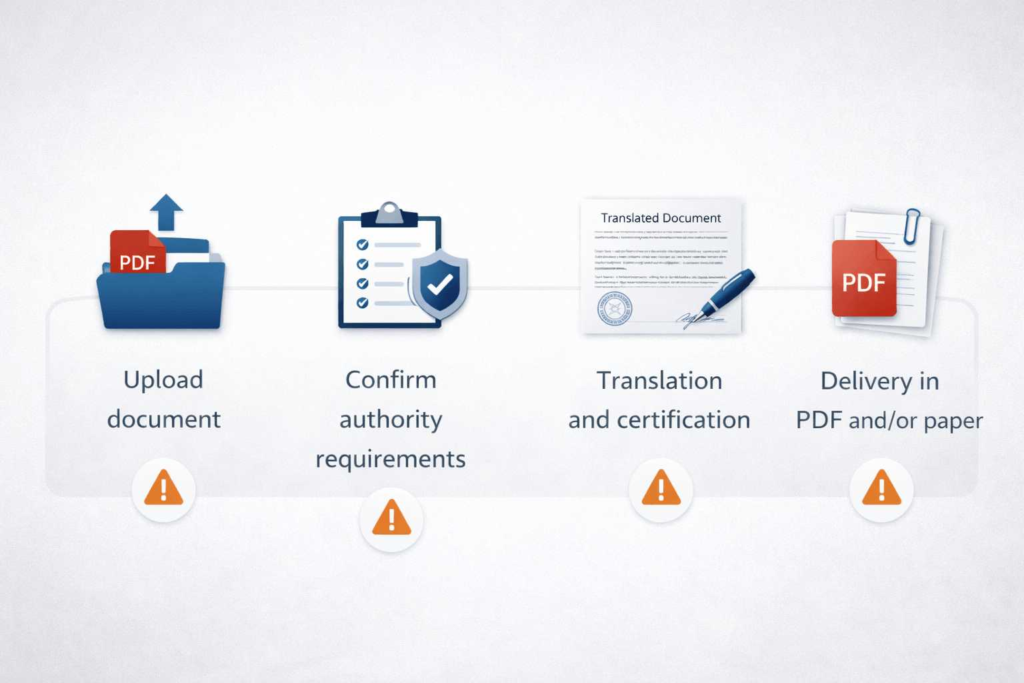
Use this simple checklist before you request a translation.
Choose digital certified translation if:
- you will upload the file to an online portal
- the recipient asked for documents by email
- the process starts with online review
- you need a fast turnaround
- no one has asked for originals, stamps, or physical copies
Choose paper certified translation if:
- the recipient asked for original documents
- you need a physical submission pack
- you need notarisation/apostille
- the process is paper-based
- you are unsure and cannot get confirmation in time
Best option for many clients: order both
For important submissions, the most practical option is often:
- digital delivery first (for speed and upload deadlines)
- paper copies after (for appointments, postal submissions, or backup)
That way, you avoid paying twice or rushing a second order if the authority later asks for hard copies.
Common mistakes that cause avoidable rejections
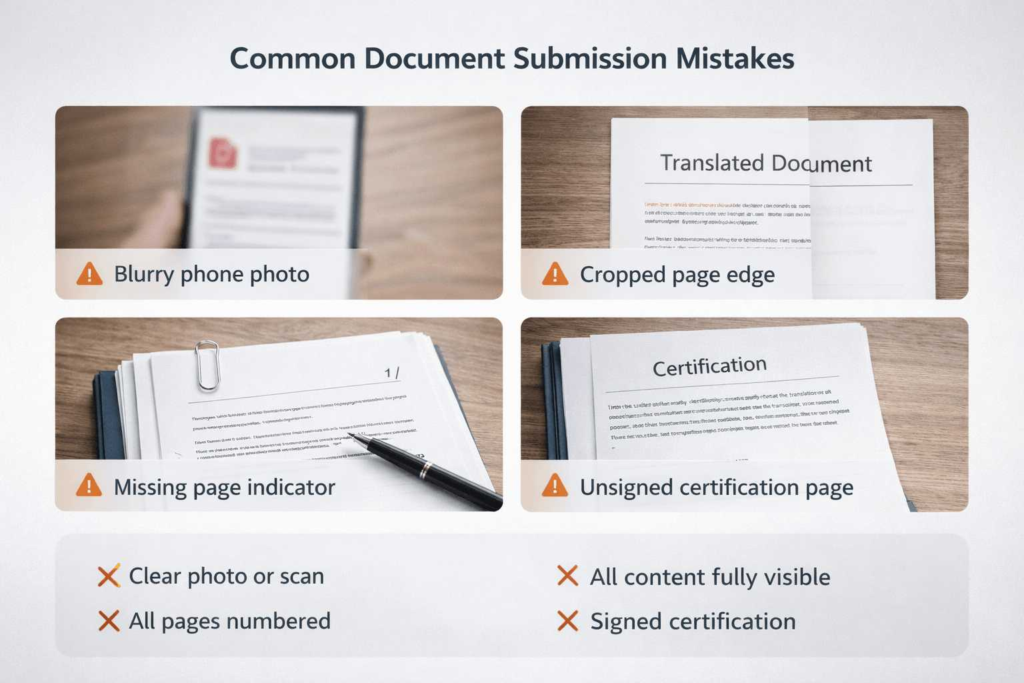
These issues are far more common than “wrong format”:
Poor scan quality
Blurred text, cut edges, glare, shadows, or low resolution make the translation harder to verify.
Missing pages
Even one missing page (or the reverse side of a certificate) can trigger a re-request.
Missing certification page
Some applicants upload only the translated pages and forget the certification statement.
Merged files with the wrong order
If the source and translation are mixed badly, officers struggle to compare them.
Unclear names or document numbers
Spelling inconsistencies between the passport, certificate, and translation can create delays.
Assuming “certified” means the same thing everywhere
Different countries and institutions use different terminology. “Certified”, “sworn”, “notarised”, and “legalised” are not always interchangeable.
Three real-world submission scenarios
Scenario 1: Visa portal upload this week
You need to upload a marriage certificate and birth certificate before a portal deadline.
Best format: Digital certified translation (PDF)
Why: Fast delivery, easy upload, and no waiting for post
Smart move: Ask for paper copies too if an interview or in-person step may follow
Scenario 2: Passport or nationality paperwork by post
You are mailing original civil documents and the guidance mentions original paperwork.
Best format: Paper certified translation
Why: The process is physical, and paper presentation is usually expected
Smart move: Keep a digital copy for your records and future use
Scenario 3: Court matter with uncertain filing rules
Your solicitor asks for translations but has not confirmed whether the court needs paper copies.
Best format: Digital first, then confirm paper requirement
Why: The solicitor can review immediately, and you can add paper copies if required
Smart move: Share the court/tribunal instructions with your translation provider
What to ask your translation provider before ordering
To avoid a mismatch, send the provider:
- the document scan/photos
- the name of the authority (if known)
- how you will submit (portal, email, post, appointment)
- any instructions or screenshot from the authority
- your deadline
A good provider should then tell you:
- whether digital is likely suitable
- whether paper copies are recommended
- whether notarisation/apostille may be needed
- what file format you will receive
- what turnaround is realistic
Why clients choose Urgent Certified Translation for digital submissions
When you are submitting official documents, speed helps, but clarity matters more.
Urgent Certified Translation is built around the details that usually cause problems:
- clear handling of names, dates, and document numbers
- certification wording prepared for official use
- visible labelling for stamps, seals, and annotations
- clean, readable PDF delivery for uploads and email submissions
- optional paper-copy delivery when needed
We also use a practical pre-delivery checklist to reduce the most common resubmission issues, including missing pages, unclear scans, and formatting problems.
“The translation service is accurate, dependable, and ensures my paperwork is accepted worldwide.”
If you already know where you are submitting, send the requirements with your file, and we will match the format to your process from the start.
What to do next
If you are unsure whether your authority accepts a digitally certified translation, send us:
- the document
- the submission method (upload, email, or post)
- any official instructions you have
We will confirm the right format before work starts, so you get a translation you can actually use.
Upload your file, and we’ll review it for readability, format, and certification requirements before confirming your quote.
FAQs
What are the best platforms for digital certified translation services in the UK?
The best platforms are usually providers that combine certified human translation, secure online ordering, PDF delivery, clear certification wording, and optional paper copies. The right choice depends on your submission method. If the process starts online, look for a provider that can deliver a certified PDF quickly and still provide paper copies later if required.
Can certified translation services be completed fully online in the UK?
Yes, in many cases. Many clients upload their documents online, approve the quote electronically, and receive a certified translation PDF by email. This is commonly suitable for portal uploads, email submissions, initial legal review, HR checks, and university applications, provided the receiving authority accepts digital submission.
What should I look for in an online certified translation platform?
Check whether the provider offers secure document upload, human translation, a certification statement, clear handling of seals and handwritten notes, fast PDF delivery, optional paper copies, and support if notarisation or apostille is needed later.
Are cheap instant translation tools enough for certified digital submission?
No. A certified translation for official use should include proper certification wording and should be prepared for formal submission. Free or instant machine tools may help you understand the text informally, but they are not a substitute for a certified translation when an authority requires official acceptance.
Which platform is best if I might need paper copies later?
Choose a provider that can issue the digital certified translation first and then supply matching paper copies from the same order if the authority later requests originals, wet signatures, or postal submission. This avoids delays and helps keep the submission pack consistent.
Is a digital certified translation accepted for immigration applications?
Often, yes, especially when the application is submitted through an online portal or email-based process. The key is whether the receiving authority accepts digital document submission and whether your translation includes a proper certification statement.
What is the difference between an electronic certified translation and a paper certified translation?
The core translation quality should be the same. The difference is the delivery format and submission method. Electronic certified translations are usually delivered as PDF for upload/email, while paper certified translations are prepared for physical submission.
Can I email a certified translation PDF to an authority?
In many cases, yes. A certified translation PDF is commonly used for portal uploads and email submissions. Always check the authority’s instructions first, because some processes still require paper originals.
Is a scanned certified translation the same as a digital certified translation?
It can be accepted in the same way, but they are not always identical. A scanned certified translation starts as a paper copy and is then scanned, while a digital certified translation may be prepared and signed within a digital workflow from the start.
Do I need paper copies if I already have a digital certified translation?
Not always. You usually only need paper copies if the authority asks for originals, physical submissions, or additional steps like notarisation or apostille.
What if I’m not sure whether digital or paper is accepted?
Send the submission instructions (or even a screenshot) with your document when requesting a quote. That is the fastest way to avoid ordering the wrong format.