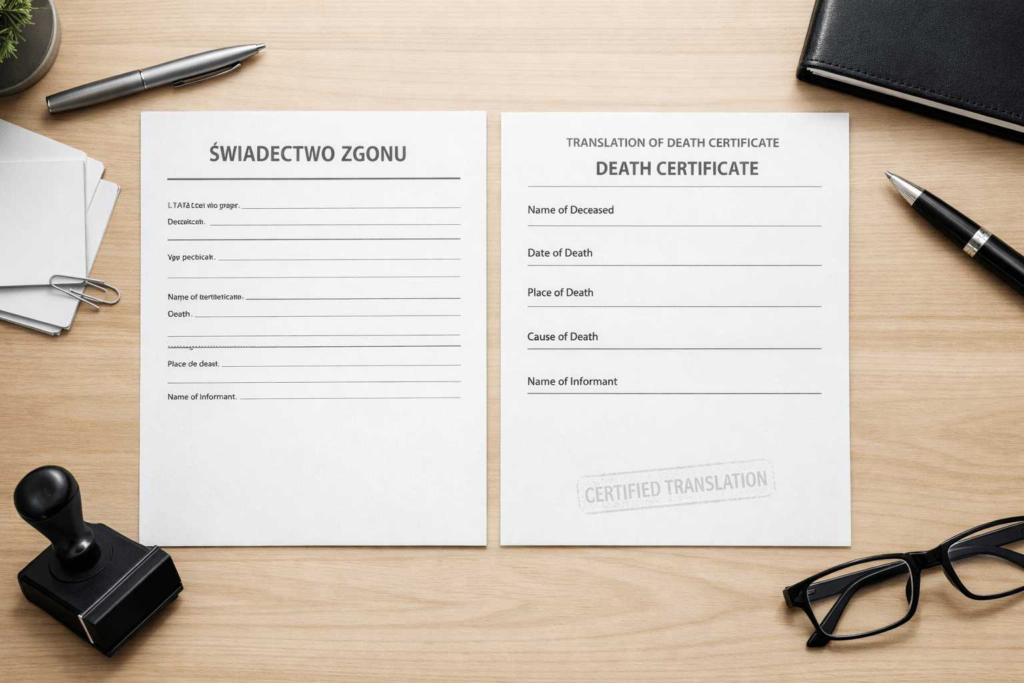
When you’re handling an estate or an immigration application, delays often come down to one thing: paperwork that isn’t accepted the first time. A death certificate is one of the most sensitive and strictly reviewed documents in any file—especially if it’s in a foreign language.
This translated death certificate guide shows you exactly what to prepare, what “certified” really means, when you may need notarisation or an apostille, and how to avoid the common issues that cause rejections or requests for evidence.
If you’d like this handled end-to-end by professionals, you can upload your document here for a fast quote and clear turnaround options.
How to get a professional translation service for a death certificate in the UK
If you need a professional translation service for a death certificate in the UK, the safest approach is to use a professional translator or translation company, send a clear scan of the full document, and tell them exactly where the translation will be submitted. That could be probate, a bank, an embassy, a court, UK immigration, or an overseas authority.
Before ordering, tell the provider:
The destination country
The purpose of the translation
Whether the authority asked for certified, sworn, notarised, or apostilled documents
Whether you need a PDF only or posted hard copies as well
In practical terms, the process is usually simple:
Scan the full death certificate clearly, including reverse pages if stamped
Upload or email the document for review
Receive a quote and turnaround time
Confirm the correct certification level for your authority
Approve the order
Receive the completed translation for submission
If the translation is for official use in the UK, it should be complete, professionally presented, and easy for the receiving authority to verify. That means the certification page should clearly identify the translator or agency and confirm the translation is accurate.
When you need a translated death certificate
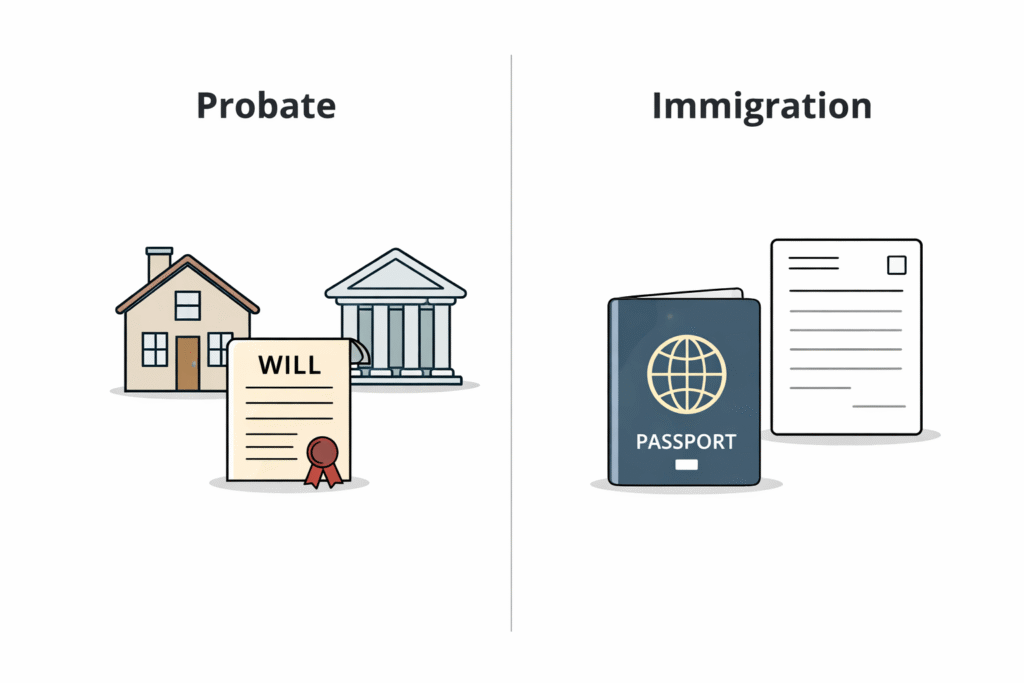
You usually need a death certificate translation when the document is issued in one country, but it must be used in another, typically for:
Death certificate translation for probate
Probate is about proving authority to deal with the estate (bank accounts, property, shares, pensions). A translated death certificate is commonly requested for:
- Grant of Probate / Grant of Representation
- Closing or transferring bank accounts (UK or overseas)
- Property transfers and Land Registry-related matters
- Insurance and pension claims
- Court filings and estate administration paperwork
Death certificate translation for immigration
Immigration files often require a translated death certificate to confirm family relationships, eligibility, or status changes. Examples include:
- Family-based applications where a sponsor or relative has died
- Dependent or derivative cases that require proof of death
- Citizenship and nationality applications involving lineage evidence
- Consular or embassy submissions
If your case involves more than one authority (for example, probate in the UK and an immigration process abroad), you should assume you’ll need a translation that’s usable in multiple contexts—formatted cleanly, fully complete, and properly certified.
What a death certificate translation must include (and what people miss)
A death certificate isn’t just “text”. It often contains stamps, handwritten entries, marginal notes, registration details, and official seals. A professional translation should reproduce all meaningful content, including:
- Full name (exact spelling, diacritics, and order)
- Date and place of birth (if shown)
- Date, place, and time of death
- Registration number and issuing authority
- Names of parents/spouse (if present)
- Cause of death (if included) and medical terms
- Signatures, stamps, seals, annotations, and headers/footers
Most avoidable rejection: a translation that looks correct but is incomplete (missing a stamp, registration reference, or handwritten note).
Certified vs sworn vs notarised: what you actually need
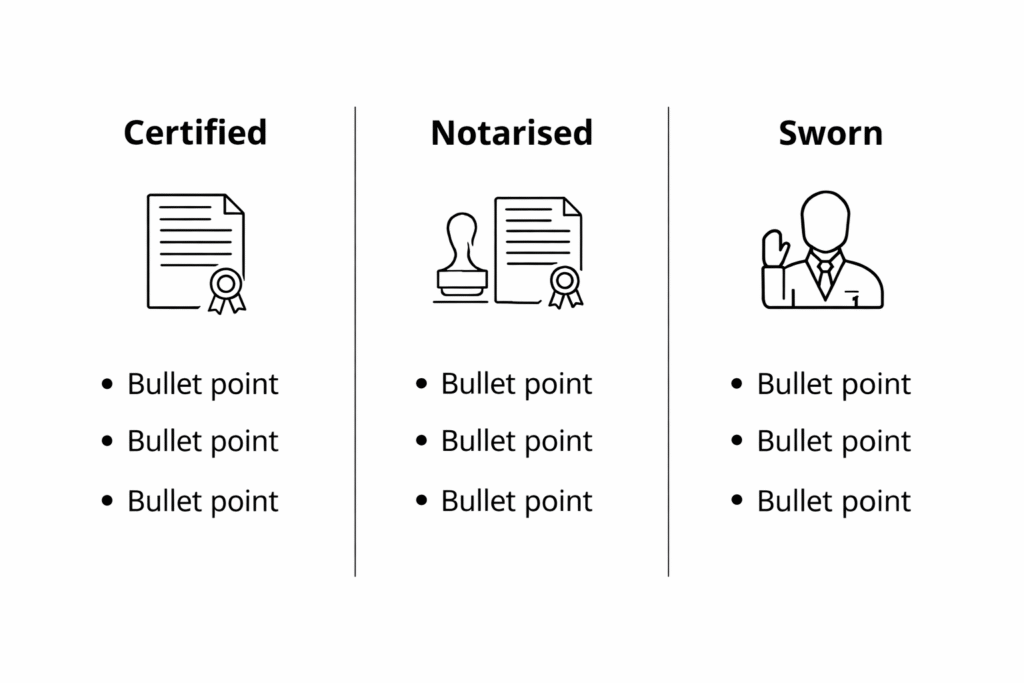
Different countries use different terminology. Here’s a practical way to decide what to request.
Certified translation
A certified translation is the translation plus a signed statement confirming it is a true and complete translation, typically with the translator’s details (or agency details). This is the most common requirement for both probate and immigration.
If you need this service, start with certified translation services and mention the destination country and purpose (probate, immigration, or both).
Sworn translation
A sworn translation is produced by a translator who has a recognised legal status in a particular jurisdiction (often sworn before a court or authorised body). You’ll typically need this when the receiving country explicitly asks for a sworn translator.
Notarised translation
A notarised translation usually means a notary witnesses the translator’s signature (or certifies the identity of the signer). Some banks, courts, or overseas authorities request notarisation as an extra layer.
If a notary is mentioned in the request you received, you may need a notarised translation.
Apostille/legalisation
An apostille is not about the translation quality—it’s about confirming the authenticity of a signature or stamp on a document for international use. Some authorities want the original death certificate apostilled, others want the translation notarised and then apostilled, and some want neither.
If you’ve been told “legalise this document” or “apostille required”, use an apostille and legalisation service and confirm whether they want the original, the translation, or both.
UK requirement in plain English
If the translation will be used for a UK visa, Home Office, or similar official process, it should be full, certified, and easy to verify. In practice, that means the translation should include:
Confirmation that it is an accurate translation of the original document
The date of translation
The translator’s full name and signature
The translator’s or the translation company’s contact details
This is one of the main reasons generic or incomplete translations get rejected. A short document still needs a complete certification page.
Step-by-step: how to translate a death certificate to English (or any target language)
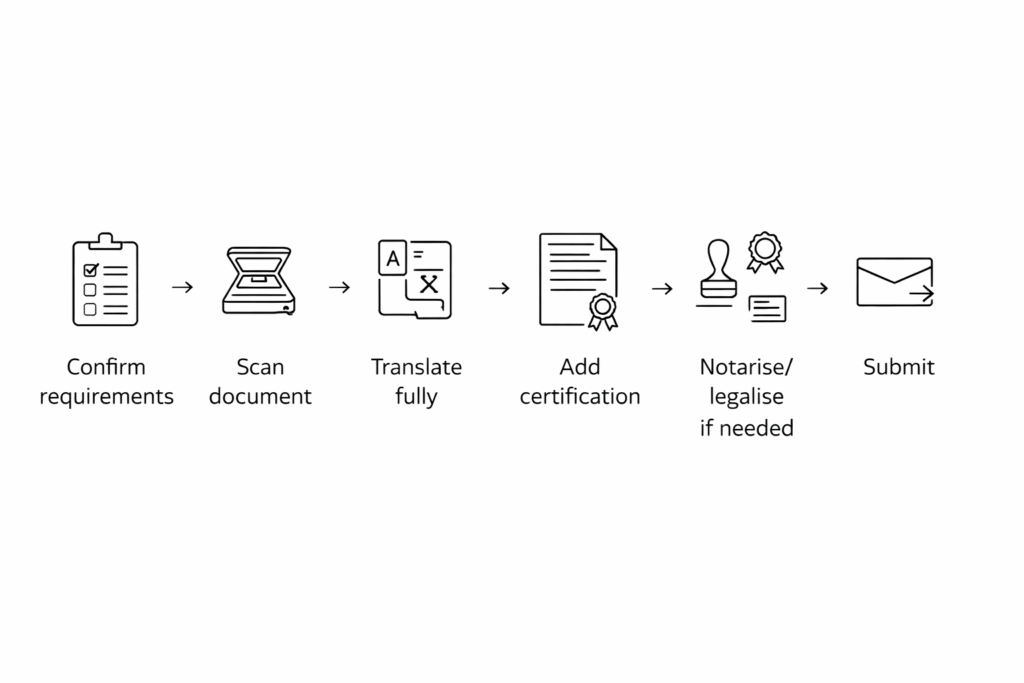
Step 1: Confirm the receiving authority’s rules
Before you pay for anything, answer these four questions:
- Which country will receive the document?
- Is the document for probate, immigration, or another legal process?
- Do they want certified, sworn, notarised, or apostilled documents?
- Do they accept digital copies, or do they need hard copies?
If the authority hasn’t been clear, ask for their exact wording. One sentence from them can save days.
Step 2: Use a clear, readable scan
A translator can only translate what they can read. Provide:
- A high-resolution scan or clear photo (no shadows, no glare)
- Full page capture (including borders, stamps, and back pages if stamped)
- All pages, even if they look “blank”
Tip: if the certificate includes a stamp on the reverse, scan both sides.
Step 3: Decide the format: mirror layout or clean typed format
Most authorities accept a clean, typed translation—provided it is complete and professionally presented.
However, for probate files or bank submissions, it often helps if the translation:
- Mirrors headings and section order
- Notes stamps/seals clearly (for example: “Round ink stamp: Civil Registry”)
- Preserves names exactly as shown
Step 4: Request the correct certification wording
A strong certification should be explicit, signed, and easy to verify.
Here’s a copy-and-paste certification template that works for many official submissions:
Certificate of Translation Accuracy
I, [Translator’s full name], certify that I am competent to translate from [Source language] into [Target language], and that the attached translation of the [Document name: Death Certificate] is complete and accurate to the best of my knowledge and ability.
Translator/Agency: [Name]
Signature: ___________________
Date: _______________________
Contact details: [Email/phone]
Address (if required): [Address]
If your case is for immigration, that certification statement (competence + complete and accurate) is the key thing reviewers look for.
Step 5: Add notarisation or apostille only if required
This is where people overspend.
- If the receiving authority only wants a certified translation, don’t pay for notarisation “just in case”.
- If they want a notarised translation, confirm whether the notary is verifying the translator’s signature or certifying a copy.
- If they want an apostille, confirm whether it applies to the original document, the translation, or a notarised statement.
Step 6: Proofcheck identity details (the “matching” test)
Before you submit, compare the translated death certificate against the rest of your file:
- Does the deceased’s name match passports, marriage certificates, and wills?
- Are dates in the correct format for the destination country?
- Are place names transliterated consistently?
- Are diacritics handled correctly (é, ñ, ü, etc.)?
If anything differs, add a short note to your caseworker or solicitor explaining why (for example, naming conventions, maiden names, transliteration standards).
Probate-specific guidance: making your translation “probate-ready”
For death certificate translation for probate, aim for a translation package that is:
- Clearly titled (Document type + name of deceased + language pair)
- Complete (including stamps, registration references, and notes)
- Professionally certified
- Delivered in the format your filing method requires (digital vs paper)
What usually causes probate delays
- Partial translation (missing seals or reverse-page entries)
- Names that don’t match the will or bank records
- Unclear certification page (no signature, no date, no translator identity)
- A scan that’s unreadable (leading to guessed text—never acceptable)
If you’re working with a solicitor, tell them you can provide a certified translation on letterhead and supply hard copies if needed. If you’re applying yourself, keep everything clean, consistent, and easy to review.
UK probate note: when Form PA19 may apply
If you are a personal applicant applying for probate with a foreign death certificate, there is an extra UK-specific point that many people miss. In some cases, you may need Form PA19 with your application.
This usually becomes relevant where:
The death certificate is foreign
It is not already in English
You are applying as a personal applicant
You do not have a certificate of translation from a licensed translation company
If you already used a licensed translation company and they provided a certificate of translation, that may satisfy the same purpose, and the additional PA19 form may not be needed. If you are unsure, check the wording on the probate guidance you were given and make sure your translator’s certification is complete.
Immigration-specific guidance: making your translation “submission-ready”
For death certificate translation for immigration, the standard expectation is straightforward: a complete translation with a proper certification statement.
Common immigration pitfalls
- Missing certification statement (or missing “competent to translate” wording)
- Submitting a translation without a copy of the original document
- Translating only the “main text” and ignoring stamps or annotations
- Inconsistent names across documents (especially where two alphabets are involved)
If your immigration case is time-sensitive, consider requesting priority turnaround and ask for a PDF version suitable for online upload, plus hard copies if your process involves mail submissions.
To support a broader file, you may also need immigration document translation for related records (birth certificates, marriage certificates, court documents, or evidence letters).
How long does it take (and what does it typically cost)?
Most death certificates are one page, so turnaround is often fast when the scan is clear, and the requirements are known upfront.
Typical turnaround
- Standard: 24–48 hours for a single certificate (varies by language and complexity)
- Priority: same-day may be possible for short, clear documents
- Multi-document probate files: allow extra time for consistency checks
What affects price
- Language pair (rarer languages can cost more)
- Formatting complexity (tables, handwritten notes, multiple stamps)
- Certification type (certified vs notarised vs sworn)
- Delivery format (digital only vs posted hard copies)
- Urgency (priority scheduling)
For a precise price, the quickest route is to upload your file and tell us where it’s being submitted (probate registry, embassy, USCIS, bank, court).
What to ask a translation provider before you order
A few simple questions can prevent delays and rework. Before you place the order, ask:
Will you translate every visible element, including stamps, seals, handwritten notes, and reverse-page entries?
Will the certification include the translator’s full name, signature, date, and contact details?
Can you provide both a PDF version and posted hard copies if needed?
Can you arrange notarisation or an apostille if the authority later asks for it?
Have you handled death certificate translations for probate, immigration, embassies, banks, or courts before?
This kind of checklist is especially useful if the translation is urgent and you want to avoid ordering the wrong service level the first time round.
Quality checklist (use this before you submit)
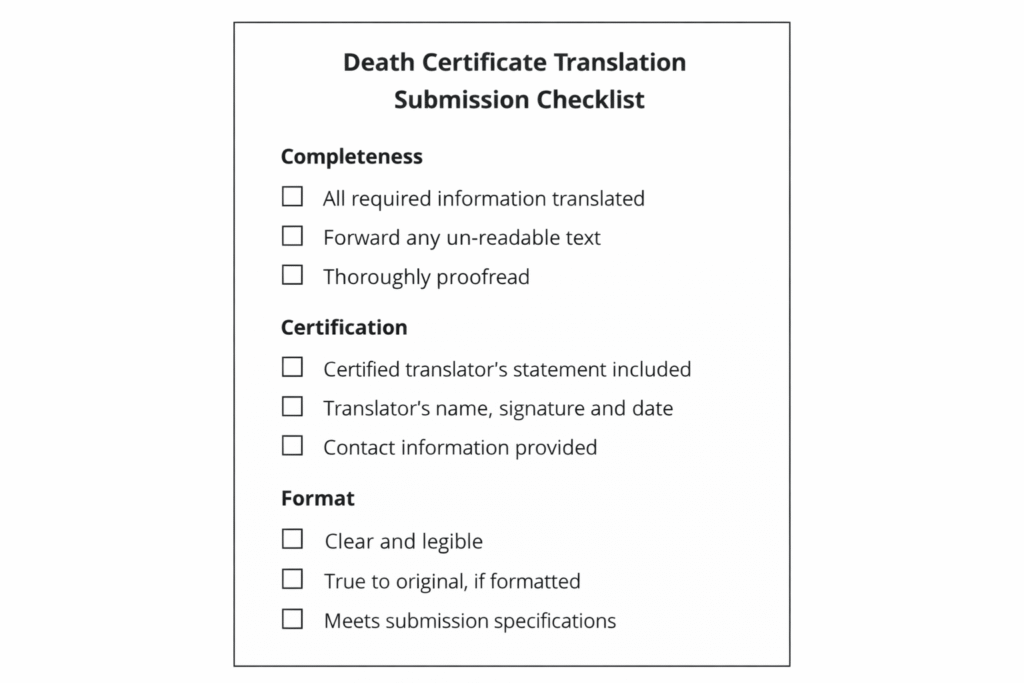
Translation completeness
- All text translated (including marginal notes and reverse pages)
- Stamps/seals described where they appear
- Registration numbers and issuing authority included
- Names and dates match the rest of the case file
Certification
- Certification includes competence + a complete/accurate statement
- Signed and dated
- Translator/agency identifiable (name + contact details)
Submission format
- PDF is clear and readable at 100% zoom
- Original document copy included (as required)
- Hard copies available if the authority requests them
A quick real-world example (why “details” matter)
An executor needed a death certificate translation for probate after a relative died abroad. The first translation was rejected because a small registry stamp wasn’t translated, and the deceased’s surname was transliterated differently from the will. A corrected translation that included the stamp description and matched the spelling across documents was accepted immediately—saving weeks of back-and-forth.
That’s the difference between “translated” and “accepted”.
Ready to translate your death certificate?
If you want the translation done professionally, with the right certification and formatting for probate or immigration, start here:
Upload your death certificate and get a fast quote: Start your translation
Questions first? Contact our team and tell us the country and purpose.
“We were under pressure with estate paperwork. The translation was clear, properly certified, and accepted the first time.”
— Private client, UK
“Fast turnaround, accurate names and stamps, no follow-up questions from the caseworker.”
— Immigration applicant
FAQs
1) Do I need a certified translation of a death certificate for probate?
In most cross-border probate cases, yes. If the death certificate is not in the language required by the probate authority, you’ll typically need a certified translation that is signed, dated, and clearly identifies the translator or agency.
2) Do I need a death certificate translation for immigration?
Often, yes—especially when the death certificate is used to prove a relationship, explain a change in circumstances, or support eligibility. Immigration submissions usually require a complete translation plus a certification statement.
3) How do I translate a death certificate into English correctly?
Use a professional translator, provide a clear scan of every page, translate all stamps/notes, and include a certification statement confirming the translator is competent and the translation is complete and accurate.
4) Can I translate a death certificate myself for an official process?
Some authorities allow it in theory, but many applications run into problems when self-translations are incomplete, poorly formatted, or missing certification details. For probate or immigration, a professional certified translation is usually the safest option.
5) Do I need notarisation or an apostille for a death certificate translation?
Only if the receiving authority specifically asks for it. Notarisation and apostilles add time and cost, and they’re not automatically required for every case. Always confirm whether they want the original document legalised, the translation notarised, or both.
6) How long does a death certificate translation take?
For a single-page certificate, it’s often completed quickly once requirements are confirmed and the scan is clear. If you need notarisation, sworn status, or legalisation, allow extra time.
7) How can I get a professional translation service for a death certificate in the UK?
Start by sending a clear scan of the full death certificate to a professional translator or translation company, then confirm the destination country, the purpose of the translation, and whether you need certified, sworn, notarised, or apostilled service. The provider can then quote based on the document, language pair, and turnaround you need.
8) Can I order a death certificate translation online?
Yes. In most cases, you can email or upload a clear scan, approve the quote remotely, and receive the finished translation as a PDF. If the authority also wants paper copies, you can request posted hard copies as part of the order.
9) What if the death certificate is already bilingual?
If the original certificate already contains a full English version as part of the official document, a separate translation may not be needed. The key question is whether the receiving authority accepts that bilingual format.
10) Do I need Form PA19 for UK probate?
Not always. It can apply in UK probate cases involving a foreign death certificate where a personal applicant does not have a certificate of translation from a licensed translation company. If you already have a proper certificate from a licensed translation company, that may serve the same purpose.
11) What should the certification page include?
At minimum, it should clearly state that the translation is accurate, show the date, identify the translator or agency, and include a signature and contact details. For immigration files, it should also confirm competence and completeness.